


Dried Molokhia - Finely Crushed Leaves
€5.90 In stock
≈ Converted for convenience — the exact total is confirmed at checkout.
Sealed for freshness
- Pay cash or by payment link
- Secure checkout
- Delivery & returns
Delivery to your hotel
Choose your area to see delivery times and fees
Flying soon? Choose the earliest window at checkout — we deliver until 00:00.
Not in Egypt yet? Order now and pick the day you land — we take orders up to a year ahead.
Sealed items: the pack is checked at the door, not the contents.
The leaf behind Egypt's national dish, crushed fine the way Egyptian shops sell it. Whisked into hot stock it thickens on contact into a deep green soup, finished with garlic and coriander fried in ghee and poured in still sizzling. 100% molokhia leaf - no salt, no garlic, no anti-caking agent. Almost certainly the thing you ate here and could not name.
Dried Molokhia - Finely Crushed Leaves — Description
If you ate one thing in Egypt that you could not identify afterwards, it was probably this. Molokhia is a thick, deep green soup, somewhere between a soup and a sauce, poured over rice or eaten with bread and served alongside chicken, or rabbit if the house is doing it properly. It is the dish Egyptians name as the national one, and it is almost unknown outside Egypt and the Levant.
The plant is Corchorus olitorius, jute mallow - the same genus grown elsewhere for sacking fibre. What is eaten is the young leaf, stripped from the stem, and its defining property is mucilage. When the leaf meets hot liquid it releases a soluble fibre that thickens the pot and gives molokhia a texture that is honestly divisive: slightly slippery, closer to okra than to spinach. Egyptians consider that texture the entire point. Some visitors never get past it.
This is the finely crushed form, which is what an Egyptian spice shop hands you if you ask for molokhia without qualifying it. Crushed leaf goes straight into hot stock and thickens within a minute or two. Whole dried leaf, which some shops also sell, has to be crushed or blitzed first and worked harder to release the same body. For anyone cooking this outside Egypt for the first time, crushed is the forgiving version.
It is nothing but leaf. No salt, no garlic, no coriander, no anti-caking agent and no colouring - the green is the leaf's own. Some shops sell a pre-seasoned molokhia with the garlic and coriander already blended in. This is not that: the seasoning is made fresh at the last moment, and blending it into a dry pouch throws away the part of the dish people stand up for.
That part is the ta'leya. Garlic, crushed hard with salt and a good pinch of ground coriander, fried in ghee or oil until it is properly golden, then poured into the finished pot while it is still spitting. The hiss when it goes in is the sound of the dish being made; every Egyptian kitchen recognises it, and it is worth doing in front of whoever you are feeding.
The method: bring a litre of well-made chicken, rabbit or beef stock to the boil, take it off the rolling boil, then whisk in three to four tablespoons of the crushed leaf. Let it come back to a bare simmer for about five minutes and no more. Do not let it boil hard - the mucilage breaks and the pot separates into green solids and thin liquid, which cannot be undone. Then the ta'leya, poured in and stirred once.
Serve it over Egyptian rice with the meat that made the stock, with baladi bread, and with raw onion soaked in vinegar on the side to cut through it. Argument over the correct consistency, the correct meat, and whether the leaf goes into boiling or merely hot stock is permanent in Egyptian family cooking, and you will not settle it.
The leaf is crushed on equipment that also handles sesame and nuts, so treat it as carrying that risk even though neither is an ingredient. Molokhia is old here, eaten across Egypt and the Levant, with a well-worn story that the Fatimid caliph al-Hakim banned it in the eleventh century - which says more about how widely it was eaten than about him. It has a long history of traditional use as an everyday food, and that is offered here as a description of the custom rather than as a health claim or medical advice.
Dried Molokhia - Finely Crushed Leaves — Specifications
- Form
- Finely crushed dried leaf - the form Egyptian shops sell by default. It goes straight into hot stock and thickens within a minute or two, where whole dried leaf has to be crushed or blitzed first. Deep green; the colour is the leaf's own.
- Pack & packaging
- Resealable, moisture- and aroma-barrier pouch. Choose 50 g, 150 g, 250 g, 500 g or 1 kg. At three to four tablespoons per litre of stock, a 150 g pouch is roughly eight or nine family pots. Press the air out when you reseal it.
- Origin
- Grown and dried in Egypt, where molokhia is a summer field crop. Growing region and supplier to be confirmed.
- Ingredients
- 100% finely crushed dried molokhia leaf (Corchorus olitorius). No salt, no garlic, no coriander, no anti-caking agent, no colouring. Contains no declarable allergens, but milled on equipment that also handles sesame and nuts.
- Flavour & aroma
- Green, deep and faintly bitter on its own - closer to a strong dark leaf than to anything herbal. Almost all its character comes from the stock and the fried garlic and coriander that finish it. The texture is the point: thick and slightly slippery.
- Flavour family & pairings
- Leaf-vegetable family, mucilaginous - the same textural group as okra rather than spinach. Belongs with chicken, rabbit and beef stock, ghee, garlic, ground coriander, lemon, Egyptian rice, baladi bread and raw onion in vinegar.
- How to use
- Bring a litre of chicken, rabbit or beef stock to the boil, take it off the rolling boil and whisk in 3-4 tbsp. Bare simmer five minutes only - hard boiling separates it. Finish with garlic and ground coriander fried golden in ghee, poured in sizzling.
- History & tradition
- Eaten across Egypt and the Levant for a very long time. A well-worn story has the Fatimid caliph al-Hakim banning it in the eleventh century, which says more about how widely it was eaten than about him.
- Who it's for
- Anyone who ate molokhia in Egypt and wants to reproduce it. Cooks confident with a stock pot. Not for anyone who dislikes okra's texture - this is more so, not less. It can be built on a strong vegetable stock, though it is traditionally a meat dish.
- Storage
- Airtight, dark, dry, room temperature. Crushed leaf is very fine and takes on smells, so keep it sealed and away from anything strongly scented. Press the air out after each use.
- Taking it home
- Light, very fine and easily spilled - keep it sealed and double-bag it, because loose green powder through a suitcase is memorable. Dried packaged food for personal use is normally fine in EU and UK baggage; check your own customs page before you fly.
Check the pack before you pay
- Choose
- We deliver
- Check the pack
- Pay
Open the box at the door: check the seals, the labels and that everything you ordered is there. Anything damaged, missing or wrong goes straight back. Sealed pouches are not opened for tasting — that is what keeps them fresh.
Recently viewed
You may also like

Premium Egyptian Dukkah - Nut and Sesame Blend
€2.41 €15.90 Sealed for freshness

Egyptian Baharat - Seven-Spice Blend
€2.14 €12.90 Sealed for freshness
Egyptian Kofta Seasoning
€1.47 €11.90 Sealed for freshness
Egyptian Shawarma Seasoning
€2.81 €14.90 Sealed for freshness New
Egyptian Hawawshi Spice Blend
€2.61 €14.90 Sealed for freshness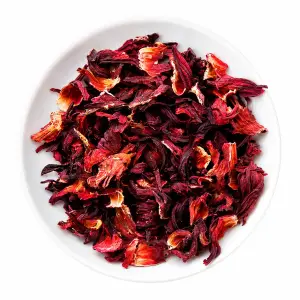

Aswan Hibiscus Karkade - Whole Dried Calyces
€2.84 €9.90 Sealed for freshness Best seller
Curry Powder - Mild House Blend, Egyptian-Milled
€4.90 €12.90 Sealed for freshnessReviews
No reviews yet — be the first after your delivery.
Write a review
Review this product
Reviews are open to customers whose order has been delivered. Enter the order number and email from your confirmation to continue.